Showing posts with label independent trave;. Show all posts

Meet the Romans in Serbia


I was sat right at the top, in the Royal Opera House it would have been seat Y51 – very high up with a restricted view. Looking down and behind the half naked archaeologist who was unmoved by the burning sun I could almost see Russell Crowe fighting ferociously for his freedom. Behind me was a flat green field with occasional glimpses of the Danube river, on whose bed was preserved this rich archaeological site.

 “We are standing at the top of the amphitheatre with a capacity of 12,000 seats” the voice of the enthusiastic guide woke me up.
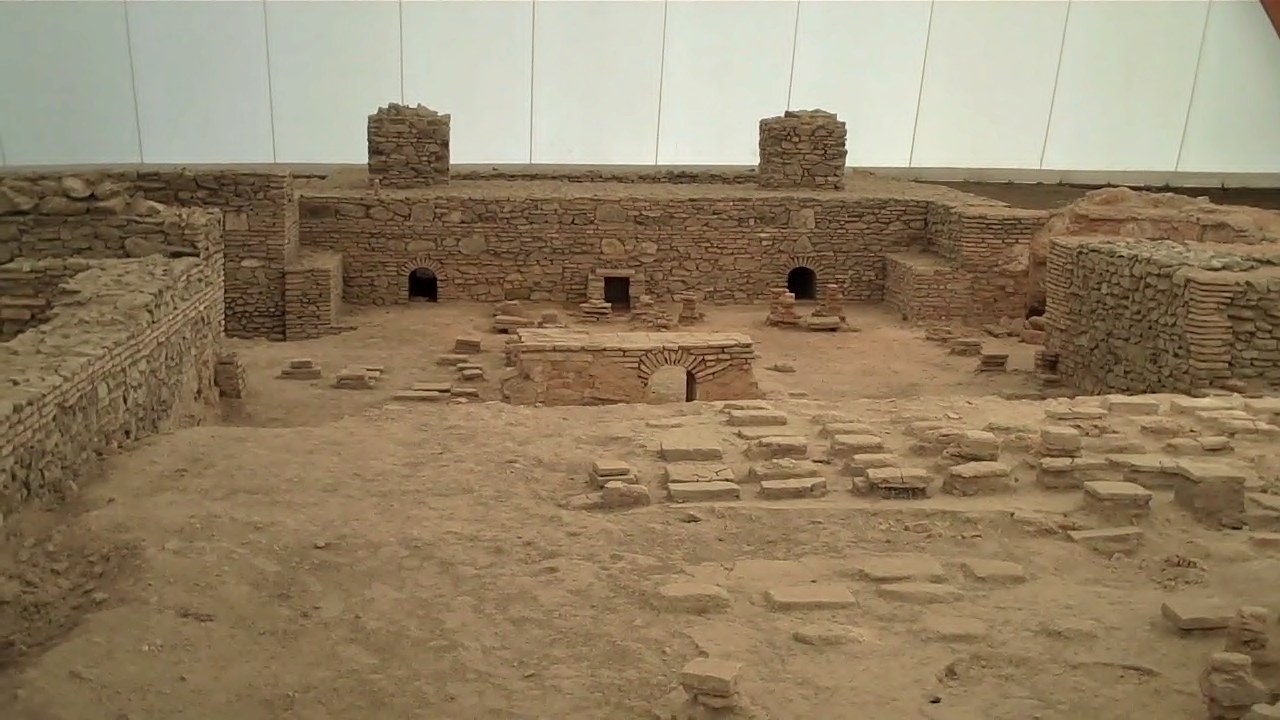
We are at Viminacium, one of many Roman towns and fortress in Serbia, not far from the capital city Belgrade. It covers a huge area and some of it is still undiscovered due to the presence of the nearby power plant which produces 20% of Serbia's energy. The government is trying to buy land still owned by the local people to stop the theft of artefacts that are uncovered after heavy rain.

Large numbers of lamps, bricks, paving tiles, rings and coins have been uncovered and exhibited either at the Museum in Pozarevac or the Museum in Belgrade. The Viminacium complex is building their own museum too at the moment.

The site has beautiful tombs decorated with frescoes whose colour was still bright and with mixed pagan and Christian symbolism. Tomb G5517 has a Christogram in a double floral garland and this is known as a Constantine Cross, after the first Roman Emperor to convert to Christianity. Tomb G2624 has animals and flowers and is clearly pagan, thus proving that Christians and Pagans were sometimes buried in the same cemetery.

Serbia has the largest number of Roman emperors born outside of Italy – 17 altogether, among them  Constantine I and Justinian I. The tourist board has put together a project to combine visits to all the major Roman excavations on Serbian soil, called Itinerarium Romanum Serbiae. It will incorporate Sirmium, today known as Sremska Mitrovica, Singindunum which is Belgrade, Viminacium or Stari Kostolac, combined with visits to the forts of Nis, Kostol and Karats. The itinerary also includes visits to the imperial residences at Gamzigrad and the UNESCO site, Ĺ arkamen, Mediana and Iustiniana Prima .

2013 will see the 1,700 anniversary of the Edict of Milan by which Emperor Constantine legalised Christianity throughout the Roman Empire, and celebrations will take place in the city of his birth, Nis. A historic moment is planned when the Pope and the Patriarch of the Orthodox Church meet formally for the very first time.

For more information about travelling in Serbia please check our website or Email Us.  

Oplenac, Serbia


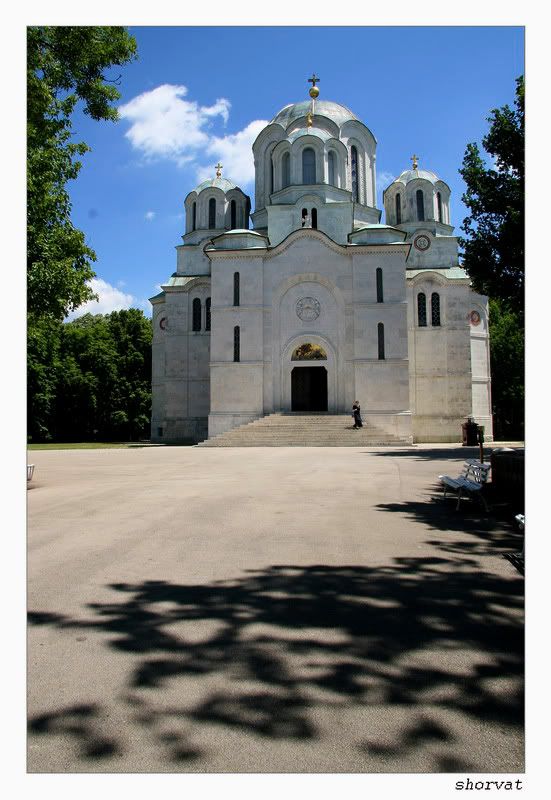
An unusually warm day in November in Belgrade gave me the excuse to take a day trip to a small town in central Serbia, called Topola. I had always wanted to go and visit this charming town to see its church of St George which is the mausoleum of the Serbian Royal Family, Karadjordjevic. The five-domed church was built in the style known as Serbian–Byzantium, a sort of oriental gothic style, between 1910 and 1930, by King Peter I who was a grandson of the founder of the royal family who led the Serbs in an uprising against the Ottoman Empire that had controlled the Balkans for centuries. The revolution was successful, the Ottomans were booted out and in 1811 Karadjordje was confirmed as the lawful ruler of Serbia and his heirs after him. At St George's Church four of Serbia's kings and 18 members of the Karadjordje dynasty are buried in the crypt, their tombs made of onyx from Decani in Kosovo, and representing the pearl of Serbia's cultural and historical heritage.
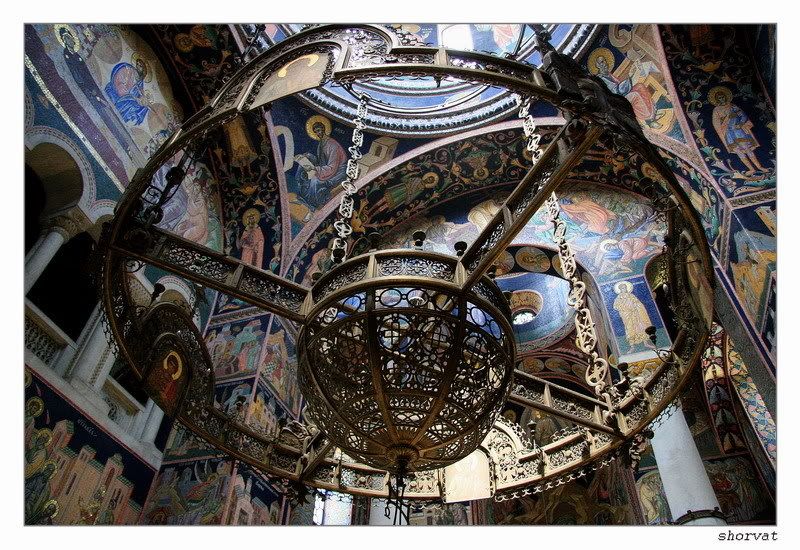
The most important characteristic of church is the mosaic that covers much of the interior walls, made from Murano glass from Venice. I loved the huge candelabra which is made of melted weapons from the Battle of Kajmackalan in WWI and in the shape of the medieval crown of Serbia but upside down, symbolising Serbia's mourning at the loss of their country at the Battle of Kosovo in 1389.
Entry tickets are 300 Serbian Dinars which is around GBP2.5 or Euro 3. The price includes entrance to St George's Church (the curator is happy to give you lots of information in English), King Peter's house (a small summer villa built in 1912 for his own use and today a museum), the villa of King Alexander I and Queen Mary (closed to visitors at the moment) and entry to the tower and Church of Our Blessed Lady of Karadjordje Town, dating from 1811-1813.
If you have time you may visit the royal winery at the foot of Oplenac Hill. Every year in Topola since 1963, on the 2nd weekend in October, the traditional Oplenac Vintage takes place.
By car from Belgrade is around 3 hours each way, through picturesque countryside. But please be aware that the roads are potholed and road signs are very poor in Serbia – most of the time there are no signs at all, and if you are lucky enough to find any they are in Cyrillic. But on the upside, there are lots of traditional Serbian restaurants known as "kafana" which serve wonderfully hearty, freshly cooked food and the average price is a modest GBP15 for a three course meal including drinks. We recommend MB Kafana.

For more information about a Private Day Trip to Oplenac and Topola or any place in Serbia please email Tara@ReadyClickAndGo.com or visit our website at www.ReadyClickAndGo.com


The National Dish of Serbia - Sarma

If you want to eat healthy wholesome meat dishes, the best time to visit Serbia is the winter – the amount of tempting homemade food makes you fat just by looking at it!

One of the most popular winter dishes is stuffed cabbage leaves and I am sure you
Zemun food market and that the best cabbage is found at Bajlonova market.I do accompany my mother on occasional trips and get dazzled by the neat displays of bright colours, and get carried away and buy a bit of everything which really annoys my mum - she buys food not for the colour but for what she is cooking that day.

Choosing the right cabbages is an art in itself. They must be round, firm, with big healthy leaves, which can peel away easily – check that by pulling off one of the outside leaves, and if it breaks, it means the cabbage won't work for wrapping around the meat. At home cut out the core of the cabbages and fill the cavities

with salt. Yes, salt. Then you lay the salt-filled cabbages neatly in a wooden barrel (which gives a much better taste than if you use a plastic bucket), filling the spaces between them with cabbage quarters, and put it somewhere cold like the cellar. Fill the barrel with water almost to the top, bearing in mind that the volume of the cabbages will shrink, then put a heavy object on the top to press the cabbages. My mum uses a 'house rock' she brought back from the mountain near Arandjelovac during one of our weekend trips when we were kids and she has only ever used it in the preparation of cabbage – it is her domestic treasure!

Leave the cabbages to soak and press in the wooden barrel for a week, keeping the rock clean and cleaning the foam that gathers on the top of the water every day. Top up the water level and add more salt – generally, use 2kg of salt for every 30kg of cabbage! After a week of this, your cabbage leaves will be ready to stuff – the recipe will be in my next blog!

For more information check our website at www.ReadyClickAndGo.com or email Tara@ReadyClickAndGo.com