Showing posts with label Serbia Traveller. Show all posts

Kovačica, centre of Naive Art in Serbia


We crossed the only bridge in Belgrade over the Danube River – the old metal, heavy thing built in 1935.  Once on the other side of Belgrade we continued towards Pancevo city, well known for its accident-prone factories which sometimes pollute the whole of Belgrade. As it was Sunday, the day for the local antiques market, we couldn’t resist stopping for a quick browse for a “good deal”. We didn’t get anything except an old CD for 50p which worked until song number four. Regardless, we considered it a good deal.
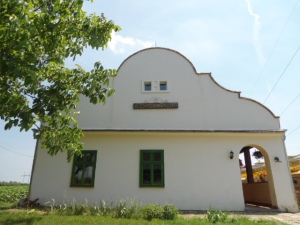
Crossing the Danube River means entering the flat Pannonia Plain where you orientate yourself only by the next tree or lonely house.  Considering that the official alphabet in Serbia is Cyrillic and that road signs are rare then that tree or house takes on more importance during your journey. Nature at this time of year (May 2012) generously painted everything in a lush green cloaking the trees and houses from sight. Everything looked the same especially for four city girls. Confused and tired by the oppressive heat we decided to stop along the way at Salas, called Sekin Salas which means Sisters Ranch. If you want to experience the real Serbia you should try to stay at one of the many ranches which offer a combination of rural Serbia with good food, clean air and lots of activities – horse riding, fishing, cooking classes…embroidery classes…During our hour stop we managed to meet the loveable Rasha, a ginger corgi who we considered stealing away, but after realising that Rasha has friends on the Ranch – three cats, two goats, a pheasant, an over-protective chicken with eight yellow chicks and two more dogs lazily asleep in the front garden - we decided that Rasha had a better life than we did, so we left him in his natural surroundings.
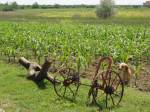
 
After refreshments and taking photos of everything that represented the old, disappearing Serbia that was so generously on display in the house, we continued driving towards Kovacica, a place well known for its Slovak naive art.

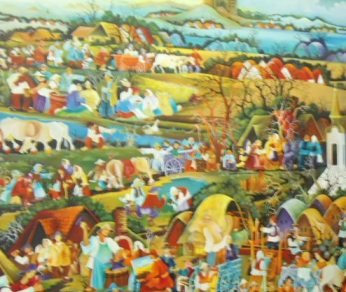
The Museum of Naive Folk Art is situated centrally on the main street. The Museum itself is very small but very rich in the numbers of paintings they own so the exhibition keeps changing all the time. The first one to strike you is a huge, colourful and lively painting by Jan Glozik illustrating the 200 years since the Slovak people moved from what was then the Austro-Hungarian Empire to the eastern border, nowadays Serbia, by order of the Emperor. The painting consists of 200 people representing each year since they moved to this part of the world. If you have a very good eye you can see a self-portrait of the painter incorporated into the maze of colours. 
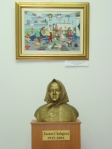
The left side of the museum has an exhibition of another famous naïve art painter, Martin Janos, whose paintings emphasise the hands and feet and thereby the hard manual work on the farms of the region. The third room is dedicated to the Queen of naïve art, Zuzana Halupova. There are 31 paintings exhibited here, most of them oil on canvas. She, as with Martin Janos, has a leitmotif which is that each painting has a girl in a pink skirt somewhere in it. Zuzana never had kids of her own and so she put one in every one of her paintings. She was member of the children’s charity UNICEF and in 1974 she painted the UNICEF Christmas Card which was sold worldwide.  She left more than 1000 paintings to the museum but due to the lack of the space only a certain number can be shown. There are talks about a new, bigger Museum to be opened in a different location.
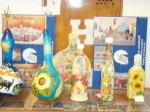
Outside the Museum there is a courtyard with three galleries, in one of them you can have your own portrait painted. All the galleries are run by local painters who can tell you about local life and how they have preserved their culture and traditions for over 200 years.   Mr Pavel Babka , a successful painter who exhibits all around the world and is the owner of the largest gallery, pointed out that even when a painter becomes worldwide successful, he still stays in Kovacica, within very strong Slovak Community.

After a good three hours at this artists’ colony we bought a couple of pictures that were most memorable to us, and decided to sit outside the Museum on a bench colourfully painted in bright flowers. Two local ladies dressed in Slovakian costume passed us slowly on bicycles. The only sign reminding us that we were in Serbia and not Slovakia was a road sign with the street name in Cyrillic.

 To create your own perfect day tour of  Kovačica email Tara at Tara@ReadyClickAndGo.com for ideas and we can customise a tour to suit you with a private guide to show you around. See our website www.ReadyClickAndGo.com for sample sightseeing tours of Serbia.


Visit to the Spa in Serbia - Visit to the Vrnjacka Banja

readyclickandgo in serbia, day tours in serbia, day trips in serbia, spas in serbia


I had decided to spend ten days in Vrnjacka Banja which is a spa situated in central Serbia, 200 km south of Belgrade close to Mount Goc and in the valleys of the Vrnjacka and  Lipovacka rivers. 
The return bus fare to Vrnjacka Spa is 850 dinar which is about £8 including the seat reservation. With your tickets and seat reservations you will get a small coin which gives you access to the departure platform for the bus. The buses are comfortable, clean and with air conditioning which is very important during the hot months of summer. At the moment, the Serbian Government is investing a huge amount of money in the motorways. Driving though the countryside is very pleasant, picturesque and during May when everything is in full bloom, very lush. The journey lasts around 3 ½ hours with short stops in the cities of Kraljevo and Krusevac to pick up other passengers. There are no toilets on the bus and the only snag is that you have to rush out of the bus station in either city, buy one of the special coins from the ticket office where queues could be a mile long, then run to the toilet! If you haven’t told your driver about your toilet excursion there is a good possibility he will leave without you!

We booked one of the best hotels in Vrnjacka Banja called The Breza, which was one of the hotels built for senior army officers. As times changed the hotel lost its glory but it’s still functional.  Officially the hotel has 3 stars but I think it should be rated lower, or refurbished. The carpets are not very clean, the hallways are dark, almost dirty, and the electric wires in some rooms look very scary – connected by isolation tape. My bed was a mattress which was ripped in the middle (I only found that out on our last day). We stayed in one of the apartments which overlooked the promenade and the park. Outside our windows there was a small balcony covered in the grass and fems. We had a TV in the room which during the day had only two channels and both of those in Serbian but during the evening you could get CNN. Our phone line was working and the fridge made a really strange noise so we decided not to use it at all. The bathroom was huge but really 1970s style. After a week the receptionist moved us to a different room which was much better – spacious, with a better mattress, a sofa, and extra bed. The TV worked during the day but we didn’t have a fridge. I preferred this room. The hotel has an indoor swimming pool, internet room with fast connection, library, restaurant and a room for table tennis, and, most importantly, a hairdresser – a cheap and good hairdresser. A cut and blow dry is only £4!!! The hotel accepts major credit cards but they prefer cash.  Breakfast is very basic – eggs, cheap salami, bread, cheese, butter, marmalade, jam, tea and coffee. As we were on half board we decided to have dinner as well which was freshly made, with different dishes every day and two choices. Also the staff was so friendly they would give you anything you asked for and if you are spoiled like me then you are in heaven. During our stay the hotel hosted two big conferences with people from all around Europe. The hotel was very accommodating and staff marvellous: hard working and always ready to put guests first. For that reason I am planning to go back and stay with in the Hotel Breza again regardless as to whether there are newer, more westernised, or better equipped hotels in the area.

I decided to take my mum on this trip to Vrnjacka Banja as she had a operation there years ago and the doctor recommended that she visits a spa regularly.

The Romans first came here for their health between the 2nd and 4th centuries, calling it AQUAE ORCINAE. The natural mineral waters here are an intrinsic part of the treatments – either by drinking them, inhaling steam, bathing, colonic irrigation and so on. You see a doctor when you arrive, and he prescribes the best utilization of the spa waters for you.    
      
readyclickandgo in serbia, day tours in serbia, day trips in serbia, spas in serbia
The central part of Vrnjacka spa is a well kept park, and we found there a memorial to the British doctors and nurses who helped Serbian soldiers during WWI. 
readyclickandgo in serbia, day tours in serbia, day trips in serbia, spas in serbia
Just outside the park is a castle called Belimirovic which is today a museum with three permanent exhibitions: photographs from 1914- 1918, a room with furniture before WWI and an exhibition of Easter eggs. Also concerts, ad hoc exhibitions, and plays take place here during the summer in an event called “100 days – 100 cultural happenings. On the opposite side of the castle on a small hill, there is the oldest building in Vrnjacka Banja- the Church of the Nativity of the Holy Mother of God built in 1834 by Prince Milos Obrenovic, and well preserved.

readyclickandgo in serbia, day tours in serbia, day trips in serbia, spas in serbia
The tourist office at Vrnjacka Banja is on the main street and easy to find. The girls are very well informed and happy to help with any enquires. As it was out of season I asked to hire a bike and she recommended a person near the Hotel Kralj whose main business is to repair old bicycles. He was happy to rent me one, in good condition, pink, girly as he said for 90 dinar which is £1 an hour on condition that I gave him some form of ID. I gave him my driving licence. He looked in his 70s but very fit for a man of his age. He also recommended a route to take. Of course I didn’t get a helmet - they are not obligatory in Serbia. Cycling up to the Hotel Borjak which is just outside Vranjcka Banja and in the hills wasn’t easy. Firstly I didn’t have a map and secondly I asked a small kid for directions who just said yes and brought me almost to the Goc Mountain which is opposite of where I wanted to be. An elderly lady sitting outside her house advised me in a motherly way that bikes are not for girls and that I was too far away anyway, which made me to turn back and cycle downslide which was a fantastic feeling. Nature is pristine here, and you can easily sit in the middle of the forest watching birds or admiring stones packed with different minerals. On the way down I stopped at a restaurant on the river and with a huge garden. It was very refreshing and I had 2 course meal for less then £8 including drinks and tips. 

The next day I arranged to visit the Zica Monastery which is around 25 km outside Banja.
readyclickandgo in serbia, day tours in serbia, day trips in serbia, spas in serbia
The Zica Monastery is an endowment of King Stefan the First Crowned and built between 1208 and 1220. Zica was the first seat of the autonomous Serbian Archbishops and it was there that 7 medieval Serbian rulers were crowned. It is painted in red – the royal colour of Serbia. The most significant part of the church is formed by the latest frescoes painted between 1309 and 1316. Nearly nothing has been saved from the once rich monastery treasury except the holy relic – the right arm of St. John the Forerunner laid in silver, which was brought to the monastery by St. Sava. Today it is preserved in St. Mary's Cathedral in Sienna. The Monastery was heavily bombed during WWII by the Germans and set on fire during their occupation.  Today it is a women’s monastery and there is only one fifth of the frescos left. The nuns support themselves by working on the land, making teas and honey which they sell. Worship takes place every day at 5 pm and I would recommend it to anyone. The singing is beautiful and the acoustics in the church are very good. The whole atmosphere is made more mysterious by closing the entry doors and the ancient rituals at the end of prayers.
readyclickandgo in serbia, day tours in serbia, day trips in serbia, spas in serbia
There are other Monasteries in close proximity to Vrnjacka Banja such us Ljubostnja , Studenica and newish one - Sv Petka. Also it is possible to organise a wine tour and horse riding.
Evening life in Vrnjacka Banja includes lots of walking up and down or sitting in the gardens of so many cafés and restaurants. Alternatively you can listen to live music, a concert or go to the cinema. Or even better just go to bed!                                       
For more information regarding travelling in Serbia please email Tara@ReadyClickAndGo.com


Tonight is Christmas Eve in Serbia and the last day of 40 fasting days before Christmas. According to tradition, today's lunch is a lenten lunch which usually consists of soup, fish, stuffed wine leaves, beans and salads and during the day we also eat dried fruit, walnuts, red wine and honey. Before lunch the tradition is to bring into the house a branch of an oak tree which symbolises the tree brought by a shepherd and given to Joseph and Mary to make a fire in the stable where Jesus was born. In the villages around Serbia the branch of oak is cut in the forest but in the big cities it's usually bought at the market or in church, and it is burned tonight to represent light and warmth bringing a new beginning. There are lots of traditions which symbolise Jesus's birth, for example, it's good to bring straw into the house to symbolise the crib in which Jesus was born, and to have coins scattered around the house similar to the gold coins given to Jesus by one of the Kings.

Tomorrow is Christmas Day and according to tradition, we go to the midnight liturgy, then in the morning a guest (ideally a young healthy male!) is allowed into the house on this day, bringing the new year. The greeting on the Christmas Day is Hristos se rodi which means Jesus is born - the reply is Vaistinu se rodi which means Verily is born. After returning from the morning liturgy the custom is to serve a Christmas lunch which means the end of the 40-day long fast. The feast starts with prayer, lighting a candle and incense. Lunch is different rotiserie meats, lots of cakes, salads and drinks, and a loaf of home-baked bread in which is hidden a coin - whoever finds it can expect lots more money during the coming year! The custom is to exchange presents and spend the whole day at home, visiting friends and family the next day.

Churches that follow the Julian Calendar celebrate Christmas Day on 7th January – Serbian Orthodox Church, Russian Orthodox Church, Jerusalem Church, Egyptian Kopti, some Etiophians, Ukrainians, Belorussians, Macedonias and Montenegrians.

Merry Christmas!

For more information about Serbia please check www.ReadyClickAndGo.com
 or email Tara@ReadyClickAndGo.com

Meet the Romans in Serbia


I was sat right at the top, in the Royal Opera House it would have been seat Y51 – very high up with a restricted view. Looking down and behind the half naked archaeologist who was unmoved by the burning sun I could almost see Russell Crowe fighting ferociously for his freedom. Behind me was a flat green field with occasional glimpses of the Danube river, on whose bed was preserved this rich archaeological site.

 “We are standing at the top of the amphitheatre with a capacity of 12,000 seats” the voice of the enthusiastic guide woke me up.

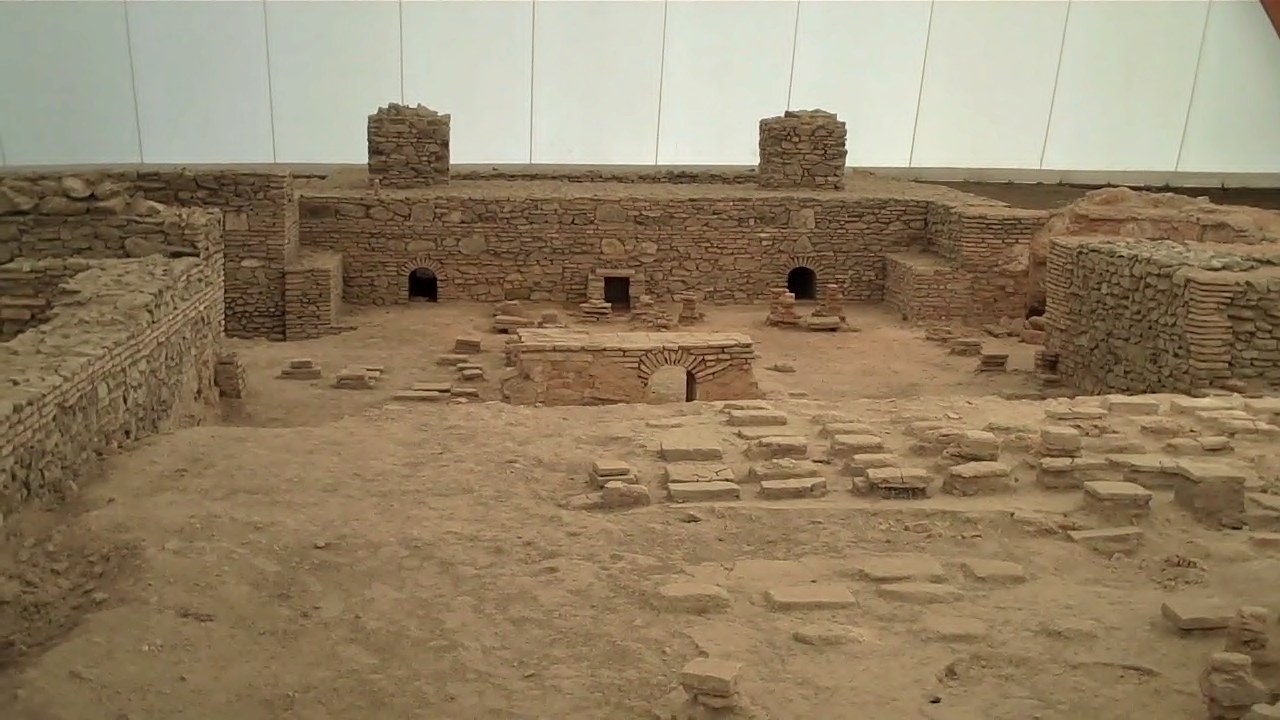
We are at Viminacium, one of many Roman towns and fortress in Serbia, not far from the capital city Belgrade. It covers a huge area and some of it is still undiscovered due to the presence of the nearby power plant which produces 20% of Serbia's energy. The government is trying to buy land still owned by the local people to stop the theft of artefacts that are uncovered after heavy rain.

Large numbers of lamps, bricks, paving tiles, rings and coins have been uncovered and exhibited either at the Museum in Pozarevac or the Museum in Belgrade. The Viminacium complex is building their own museum too at the moment.

The site has beautiful tombs decorated with frescoes whose colour was still bright and with mixed pagan and Christian symbolism. Tomb G5517 has a Christogram in a double floral garland and this is known as a Constantine Cross, after the first Roman Emperor to convert to Christianity. Tomb G2624 has animals and flowers and is clearly pagan, thus proving that Christians and Pagans were sometimes buried in the same cemetery.

Serbia has the largest number of Roman emperors born outside of Italy – 17 altogether, among them  Constantine I and Justinian I. The tourist board has put together a project to combine visits to all the major Roman excavations on Serbian soil, called Itinerarium Romanum Serbiae. It will incorporate Sirmium, today known as Sremska Mitrovica, Singindunum which is Belgrade, Viminacium or Stari Kostolac, combined with visits to the forts of Nis, Kostol and Karats. The itinerary also includes visits to the imperial residences at Gamzigrad and the UNESCO site, Šarkamen, Mediana and Iustiniana Prima .

2013 will see the 1,700 anniversary of the Edict of Milan by which Emperor Constantine legalised Christianity throughout the Roman Empire, and celebrations will take place in the city of his birth, Nis. A historic moment is planned when the Pope and the Patriarch of the Orthodox Church meet formally for the very first time.

For more information about travelling in Serbia please check our website or Email Us.  

Art, Wine and Honey in Novi Sad, Serbia


The National Museum in Belgrade, Serbia is the largest and oldest museum in Serbia, and has over 400,000 objects including many foreign masterpieces. Unfortunately the Museum has been closed for renovations for more than five years.If you wish to learn more about Serbian national art we at ReadyClickAndGo would suggest you visit Novi Sad, Serbia’s second city, just an hour and a half north of Belgrade along scenic country lanes, or, if you can read the Cyrillic alphabet, you can get the train, or take the bus down the motorway.  

The Matica Srpska Gallery in Novi Sad is to be found in the old Stock Exchange building and it has more than 7,000 works of art, especially that from Vojvodina from the 17th century onwards. All the exhibits have English translations. On the ground floor are copies of the frescoes painted by Christopher Zefarovic at the Bodani Monastery in 1737, on the first floor are paintings and carvings, including precious icons from the Orthodox churches of Vojvodina. The second floor has a permanent exhibition called People and Events, and displays pictures from 1900 to 1940 when the country was fighting for freedom and its national identity, and on the third floor are superb paintings from some of Serbia’s greatest artists, classic, romantic and realist – Constantine Daniel, Dure Jaksic, Uros Predic, Paja Jovanovic, Save Šumanović and Milan Konjovic. There are also the famous paintings ‘The Cockfight’ and ‘Wounded Montenegrins’ and one by Jovanovic for the World Exhibition in Paris in 1900, a huge historical composition, ‘The Proclamation of Dusan’s Law’. The Matica Srpska Gallery is open from Tuesday to Sunday from 1000–1800, Friday 1200-2000. The entry fee is RSD200 whcih is around 2 euros. Try to visit during the week as there will no one there except you and you can have the whole place to yourself. 
Next to the Gallery there is the Memorial Collection of Pavle Beljanski who was a diplomat and huge lover of art who dedicated his collection to the Serbian nation. This gallery is open Wednesday to Sunday 1000–1800 and on Thursdays from 1300- 2100. Entry is RSD300.Opposite these two galleries there is another, this time of a collector called Rajko Mamuzic who also dedicated his collection to the Serbian people - it is well worth a visit and is also free of charge.

On the way back to Belgrade we stopped at the Musuem of Bee Keeping and Wine Celler at the Zivanovic family home. We met Mr Zarko Zivanovic whose great-grandfather was a professor at the famous Karlovac grammar school but was also the founder of modern beekeeping in Serbia and a man who had a great knowledge of wine making. In the family house is a unique beekeping museum with objects you rarely see nowadays but which used to be common – such as beehives made of thin strips of dried wood woven into a dome shape and covered in mud – very different from the beehives made today. Extracting honey in the old days was rather hit-and-miss and of course, there were no protective clothes then either – but people did believe that beestings were good for the blood! The honey at the Zivanovic farm is very clear and thick, not runny, which shows there are no preservatives added, unlike what you get in a supermarket.
Along with beekeeping and producing high qualilty honey the Zivanovic family is at the forefront of wine production in Serbia and are winning awards, diplomas and medals at home and internationally. They own huge vineyards 200 m above sea level near the Danube on the slopes of the Fruska Gora mountain, and their wine is produced in 300-year-old cellars. Their Ausbruch wine was on the wine list on the Titanic. Their greatest secret is the old recipe, passed down through the generations, from which is prepared Bernet wine, and this Bernet was served at the Russian, English and Viennese courts right up until the First World War. Similar to Port but much stronger, it is made from natural wines with the addition of 27 different ingredients such as raisins, beans, mustard, nutmeg, vanilla and figs.

If you are passing through Novi Sad visit this unique place and you won’t regret it - you can book combined visits to the museum and the wine cellar with wine and honey tastings too. As an added bonus I would recommend you try to sneak inside Mr Zivanvic’s house to meet his grandmother, a beautiful, charming lady with an unbelievable zest for life which I guess is the result of plenty of healthy honey and fine wine!

For more information about Serbia and travelling to Serbia please email Tara@ReadyClickAndGo.com


Where is Europe?


A few years ago we went for a long weekend to Morocco and as a  responsible traveller we arranged insurance which clearly stated that Morocco is in Europe. Then we went to Slovenia which was referred as the most progressive country of Eastern Europe. Of course the Slovenians were not impressed being positioned in Eastern Europe when they are clearly ’an Alpine country bordering Italy and Austria ’.
Here in the UK they refer to Europe as a continent. “We are going to the continent for a holiday” means two weeks in Provence.
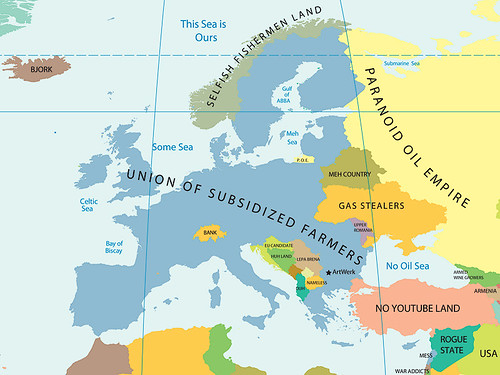
So where are the borders of Europe? And does a single Europe exist? Or are there   Eastern, Western, Scandinavian, Balkan, Alpine, Central, South Eastern Europe …And this divide is valid only if you are coming from the Western Hemisphere. If you are flying from China then Eastern Europe is Germany, Holland, UK, France!
The most significant eastern border of Europe was established by the Swedish geographer and cartographer von Strahlenberg  as lying in the Ural Mountains. But that border is not in accordance with the EC divide which has members of the EC, non members of the EC and prospective candidates. As someone who comes from Eastern Europe, from a country which is not a member of the EC and a long way from  even becoming a candidate,  I find it very difficult to explain to people when they ask me where I come from. Sometimes I make a terrible mistake saying “the former Yugoslavia” and we end up talking about the Iron Curtain in Europe when there was a clear divide based on political systems. We were communist and the rest of Europe capitalist. Then in accordance with political preferences the United States and Western Europe established the NATO alliance and later the Soviet Union and Eastern Europe established the Warsaw Pact. I felt for the Germans being divided into East and West but also divided into NATO and the Warsaw pact. Then after forty four years Germany was reunited, after the symbolic fall of the Berlin Wall in 1989, and the maps of Eastern Europe were redrawn once more.
I think only the Europeans define themselves so much by division - mainly by geography but usually by wars  - while the rest of the world see us just as  ’ Europe’ .There are various descriptions of Europe’s boundaries, some some sources include territories that other sources do not include in Europe. 
For example, Cyprus is close to Turkey but is often considered part of Europe and is a member state of the EU. For Western Europeans, Eastern Europe is Bulgaria but for the Bulgarians themselves Turkey is Eastern Europe as far as the Bosporus Straits, but for Western Europe Turkey is not Europe at all. Lots of people think that Malta belongs to Africa. Would you say Finland was in Europe or Scandinavia? Or is Bosnia in the Balkans or Europe? When you search for your next holiday please have a look at which countries  are really ‘Europe’.  The travel industry is the biggest culprit for dividing Europe. Usually by price.
What do you think where are they – the borders of Europe? My email is Tara@ReadyClcickAndGo.com or leave comment here.
 

What to see in Belgrade


Am I the only Yugoslavian who hasn’t visited the Flower House, the resting place of the last President of Yugoslavia, Tito? I was born and brought up under liberal communism and I should be grateful to him – Tito. But I was never confirmed into Tito’s youth organisation, the Pioneers, which had an initiation ritual which was almost religious, albeit without the live animals but a kid’s soul instead, and with no mention of God, only Tito. This was when you had to confirm your commitment to your homeland, brotherhood and unity and fellow Pioneers, but a few weeks before my big day I got appendicitis and was hospitalised and never again got the chance to declare my love for my country or see the communist light. When he died I didn’t feel obliged to pay my respects to his casket or visit his tomb, even though I was constantly pestered to. I just didn’t feel the need. Then 20 years later, after exploring the EC in depth by living in various countries, a friend decided to come to Belgrade and visit Tito’s tomb. Of course the guide was me. I wanted to see if I was still Yugoslavian.
Tito’s tomb is in the Museum of the 25th May, part of the Museum of the History of Yugoslavia, and is very close to Partisan Stadium, and at the beginning of December it was almost empty except for the coachload of visitors from Slovenia - the highest number of foreign tourists to Serbia are from Slovenia. Is this guilt or a desire to learn what they were part of for 46 years?
ReadyClickAndGo, Serbia The old Museum is now a large exhibition space and its current exhibition is Polish and Russian official and dissident art, called “Behind the Iron Curtain”. It is divided into 3 sections, WWII, the rebuilding of the war-torn country and happy people, and this last section had numerous portraits – farmers in the field, the naval officer with a huge medal, an ordinary, good looking woman in a blue suit with the communist star proudly pinned over her heart. The most significant work is from 1936 and shows Stalin’s name in big red letters with Lenin’s face reflecting back in the red paint. 
After the exhibition we went to see the “Flower House” and Tito’s tomb. The complex of the buildings used by Tito during his life is now his resting place. There are lots of angry people who think that Tito’s resting place should move from Belgrade to Croatia as he was Croatian and also because he damaged Serbia by dividing her into three parts, Inner Serbia, the Autonomous Region of Kosovo and the Autonomous Region of Vojvodina. There is even someone so resentful that they keep trying to sell his tomb on the Serbian version of Ebay!
His tomb is very simple, plain white marble with his name and dates of birth and death engraved in gold. Sceptics are commenting on the absence of the red star, a symbol of communism, convinced that he was a Mason, although no one proved this yet. His tomb is positioned so that he can see the biggest working Church in Europe, St Sava. I am sure Tito didn’t want a view over a church especially when proclaiming that “Religion is the opium of the people” and went on to close down so many Orthodox churches, prosecuting priests and abolishing all religious gatherings. 
ReadyClickAndGo, SerbiaHis office is filled with Ching dynasty furniture, generously given by a Slovenian family which made me wonder about the  combination of the two. But of course there are lots of unanswered questions about the communist time. There is a huge collection of batons which were used on mass relay races throughout Yugoslavia when all sorts of people would run – housewives, pioneers, workers, peasants, reformed political dissidents – and at the end present their batons to Tito at the Partisan Stadium on his birthday, 25th May. There would be a huge ceremony and half the schools and Universities in the country were closed. Did I go to any? No. My mum keeps saying that I am an antisocial person. 
Next to the Flower House there is a permanent exhibition of official gifts presented to Tito. Some are very bizarre such as the face towel, handmade and inscribed with “to dear Tito”. The art is beautiful but purpose wrong. I stayed the longest in front of a sword from XVII century brought to Sarajevo by the great great great grandchildren of Mehmed Pasa Sokolovic who got it from the Sultan of the Ottoman Empire. The sword is beautifully worked with Arabic inscriptions described by Orhan Pamuk in his book “My Name is Red”. There a good display of national customs from different parts of the former Yugoslavia, and it was nice to see them today when we are all dressed the same jeans and leather jackets. All the exhibits have an English description and the staff are very helpful. The atmosphere is very laid back and very organised. I bought a great souvenir, Tito’s cookery book with recipes for the meals served to his famous guests, Kennedy, Richard Burton and Elizabeth Taylor, Gina Lolobridga, Kissenger and so on. 
We spent a good three hours at the museum altogether.  Entry tickets are 300 dinars, about £2.50.
ReadyClickAndGo offers private day trips and sightseeing excursions throughout Serbia, with your own English-speaking local guide, car and driver. A private city tour of Belgrade with a private car, driver and English-speaking local guide is £65 per person.
For more information please email Tara@ReadyClickAndGo.com or check our website at www.ReadyClickAndGo.com
Tara

Belgrade's newest attractions


ReadyClickAndGo, a travel company specialising in private day trips, spent a few days in Belgrade last week to discover more about this fast-changing city’s latest highlights:


1. Virtual Tourist has recently declared Belgrade’s Ada Ciganlija Island to be the 3rd best island within a city, behind Paris and Prague. Perfect for picnics and watersports, the island is covered by trees that muffle the sounds of the city, and it is also the site of Serbia’s first golf course. The beautifully clean waters of Sava Lake that lap its gravel beaches are home to many varieties of carp, and can reach 24 degrees C in the summer, thanks to the warm microclimate here http://www.reuters.com/article/idUSTRE6B229Z20101203


2. At the tip of the island you can watch one of Belgrade’s most eye-catching landmarks taking shape, a new bridge across the Sava River that will be the largest asymetric single-pylon cable-stayed bridge in the world. The main span of 376m has no supports actually in the Sava so as not to restrict shipping even during construction, and the deck is anchored by 80 stay cables as thick as a man’s arm and a single pylon 200 metres high – one of the highest points in the city. The whole bridge including the main span will be nearly a kilometre long and 45 metres wide with 6 road traffic lanes, 2 railway lines and 2 cycle and pedestrian paths, and it is due for completion in September 2011. http://www.savabridge.com/project.htm


3. Just a few metres higher than Sava Bridge is Mount Avala’s TV transmitter tower, reopened earlier this year and a popular out-of-town picnic spot for locals. This new tower is almost identical to the original that was bombed by NATO in 1999, and money for its reconstruction was raised by donations from over a million people. It is slightly taller and much better built however, and is one of few built as a tripod anywhere in the world. http://serbiatraveller.blogspot.com/2010/11/avala-mountain-and-national-park-near.html


4. Another tower in Belgrade has been restored and will re-open any day now, and that is the medieval Nebojsa Tower at the foot of Kalemegdan Fortress. Renovations were partly funded by Greece as one of their revolutionary heroes was executed in the tower when it was a prison, and one of the exhibitions will feature his life. Other exhibitions will be on the shared history of Serbia and Greece under Turkish occupation.

5. The Museum of Yugoslav History is hosting an exhibition of modern art until the 15th February 2011 in the Museum of 25th May, called Beyond the Iron Curtain. Painting and sculpture by Soviet and Polish artists from 1945 to 1989, both official and dissident, is on display, and you can also visit Tito’s tomb, ironically with a great view of the vast new St Sava Church.

Whilst travelling around Belgrade can be straightforward on public transport or on foot if you can master some Cyrillic script first, getting out of the city is often a little more challenging. ReadyClickAndGo offers private day trips and sightseeing excursions throughout Serbia, with your own English-speaking local guide, car and driver. A private day trip from Belgrade city centre to Avala Mountain and the nearby Vinca archaeological site with a private car, driver and English-speaking local guide is £75 per person.

For more information about Serbia please email Tara@ReadyClickAndGo.com

A Serbians second home, the kafana


Kafana Albanija in Belgrade, Serbia 1933
The English have pubs, the French their cafes, Italians their ice cream parlours, the Greek Tavernas and we, Serbians, have Kafanas or second homes as we spend more time there than at home. The word Kafana is derived from the Turkish kahvehane (“coffee house”) which is in turn derived from the Persian term qahveh-khaneh and the first kafana in Serbia was opened by the Turks in the part of Belgrade called Dorcol, in 1522, at the start of their 400 year occupation of the Balkans.
Kafanas are a cult for Serbian people and any self-respecting Serb has kafana or two. Maybe three depending on what your average Serbian citizen needs one for at any given time in his social life.In the past a kafana always had red or blue checked tablecloths and tin ashtrays but today many kafanas masquerade as restaurants or cafes or even clubs, but at heart they are simply a kafana. So there is a kafana for a social gathering which includes lots of alcohol interspersed with breaks for tasty food, loud live folk music, with smashed glases on the floor and dancing on the tables.
There are kafanas near the office where all the office games and intrigue take place, always described however as ‘business meetings’.  There are a few kafanas which are always full even though there is never any live music or good food, but which still live on their reputation as a haunt for long-ago heroes or intellectuals who would freely discuss politics during the communist era when there was no reliable information except what could be gleaned in such places – nowadays people still go there to be seen and to gossip. And there is a new breed of family kafanas where there is no live music only a kids’ garden in the back, and very good food!
You know you have succeeded in life if the waiter of your kafana knows you by name, your favourite table has a reserved sign on it just for you and when you get your favourite drink served before you even take your jacket off. If you are well known and short of money you can drink and eat free and pay when you get money.  You waiter is your best friend and confidant as he knows where you are and never tells anybody. Not even your other half.
Skadarlija, Belgrade, Serbia
If you are coming to Belgrade you must explore a bohemian part of town called Skadarlija where live music and good food last until the early hours. The most famous kafana here is Tri Sesira (the three hats) but there are many others, such as the Dva Jelena ( Two stags ), Ima Dana and the famous Znak Pitanja (the question mark, the kafana with no name). This is in an old traditional house, typically Serbian, very rustic, with laid-back service and good food.
A small tip for foreigners going to a kafana with Serbians – your host will never allow you to pay for dinner or drinks, so don’t even try to pay. Just raise your glass, look at your host and shout cheers – ZIVELI!!!!! 
For more information about Serbia and private dat trips in Serbia please email Tara@ReadyClickAndGo.com or check our website at http://www.readyclickandgo.com/

Avala, a mountain and National Park near Belgrade, Serbia

Another weekend of very warm weather in Belgrade for this time of year (November and it's 20 C) brought a huge number of people out to visit Avala, a mountain and National Park 16 km from Belgrade. Avala was a part of my upbringing. I would visit at least once a year, mostly with my family - we had vast numbers of relations who'd visit us in the city, and we'd run out of ideas where to take them and always end up doing a day trip to Avala, sometimes with a picnic in one of the many hidden spots on the mountain, sometimes having lunch in the restaurant in Avala Tower. At school there were day trips to Avala for every pupil to learn about the Monument to the Unknown Hero and as a university student I had some field work there, learning everything about the geomorphology of Avala and orienteering in the forest. 

The reason for the huge number of visitors last weekend is the newly opened Avala Tower, one of Belgrade's landmarks, which has been restored and reopened in April this year after the NATO bombing of in 1999 which wrecked it. The original construction started in 1961 and finished in 1963 and at the top was an enclosed observation deck from which you could see as far as Belgrade and it was one of the city's main tourist attractions. Today the old glory of the Avala Tower is restored and the views are even more magnificent. The only setback is that the restaurant hasn’t been opened yet, but there is a nearby hotel, the Avala, with nice rooms and restaurant, and a small cafe at the foot of the tower itself. Food here is very good and affordable.

A village called Zmov grew up at the top of the mountain in the Middle Ages, and when the Ottomans invaded in 1442, they took it over and built a fortress which they named Havale (meaning shelter) to oppose Belgrade's Kalamegdan fortress which could be seen in the distance. In 1934 by order of King Alexander I of Yugoslavia, the village of Zmov was bulldozed to make way for the Monument to the Unknown Hero, an anonymous Serbian soldier from WWI.  Marked only by the dates 1912-1918, the monument also commemorates those lost in the Balkan Wars (1912–1913). The monument was created by the well-known Croatian sculptor Ivan Mestrovic in the form of a mausoleum with 8 female figures, each representing a woman from a different historical region of Yugoslavia.

On the way to Avala there is a Monument to the Soviet War Veterans, the members of a Russian military delegation who died in an airplane crash on their way to Belgrade for the celebration of the 20th anniversary of the liberation of Belgrade in WWII, October 20, 1944 - it was the Red Army who liberated Yugoslavia. And at the top of Mount Avala there is also a Memorial Park dedicated to the victims of WWII - so the whole mountain is steeped in the history of Yugoslavia and it is a very significant place to us.

If you are staying in Belgrade we would definitely recommend a visit to Mount Avala or even an overnight stay there as there are plenty of opportunities for walking, trekking, cycling or simply enjoying the stunning views.

For more information about Serbia please email Tara@ReadyClickAndGo.com or visit our website at www.ReadyClickAndGo.com

How to make Serbia's favourite dish - Sarma?

In one of my previous post I explained how to make a sauerkraut in order to make a Serbian favorite dish - Sarma. Today you will find a recipe how to make her Highness of winter dishes - sarma. If you need any help or explanation please email me at Tara@ReadyClickAndGo.com  
You need the following ingredients:
5 large leaves of sauerkraut, rinsed and drained
1 pound minced pork or beef
1 teaspoon salt
1 teaspoon of ground paprika
1/2 teaspoon of black pepper
2 large eggs, well beaten
1/2 cup of uncooked rice, rinsed
3 slices of smoked bacon
1/2 pint of tomato sauce 
6 tablespoons of cooking oil
4 tablespoons of flour
Gently fry in some oil the minced pork or beef, adding the salt, ground paprika, eggs and rice, and stir. Once it's browned, place a large spoonful of the mixture into each of the sauerkraut leaves, wrap them into rolls tucking the ends of the leaves in, and place in a cooking pot. My mum usually covers the bottom of the pot with cabbage leaves first, to prevent the sarma burning and disintigrating. Once all the stuffed leaves are placed neatly, cover them with a mixture of the smoked ham which we usually cut into small pieces fried with the tomato sauce for a juicy taste. Put any remaining cabbage over the sarma and add enough warm water to cover the rolls. Bring it to boil and then reduce the heat, cover and cook gently for 2 hours, adding a paste of oil and flour to thicken the sauce if necessary half way through.
  
Sarma freezes well and can be served hot or cold.

Enjoy.
For more information about Serbia please email Tara@ReadyClickAndGo.com or visit our website at www.ReadyClickAndGo.com


Oplenac, Serbia


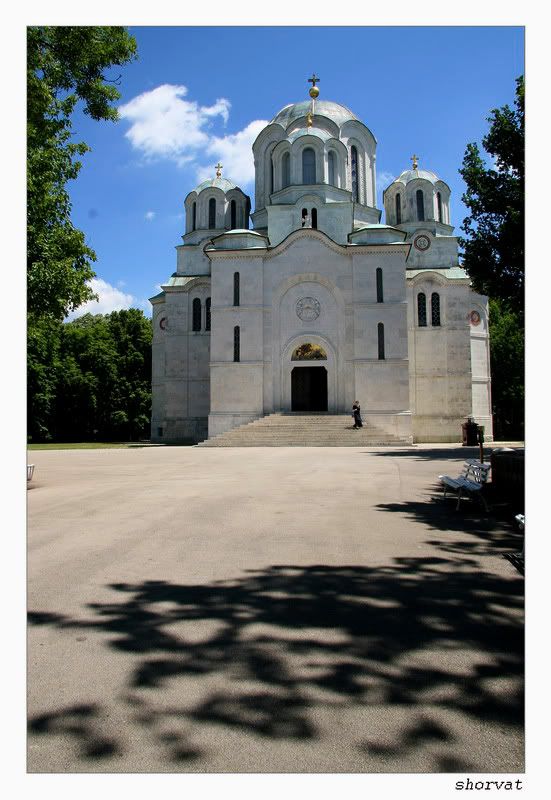
An unusually warm day in November in Belgrade gave me the excuse to take a day trip to a small town in central Serbia, called Topola. I had always wanted to go and visit this charming town to see its church of St George which is the mausoleum of the Serbian Royal Family, Karadjordjevic. The five-domed church was built in the style known as Serbian–Byzantium, a sort of oriental gothic style, between 1910 and 1930, by King Peter I who was a grandson of the founder of the royal family who led the Serbs in an uprising against the Ottoman Empire that had controlled the Balkans for centuries. The revolution was successful, the Ottomans were booted out and in 1811 Karadjordje was confirmed as the lawful ruler of Serbia and his heirs after him. At St George's Church four of Serbia's kings and 18 members of the Karadjordje dynasty are buried in the crypt, their tombs made of onyx from Decani in Kosovo, and representing the pearl of Serbia's cultural and historical heritage.
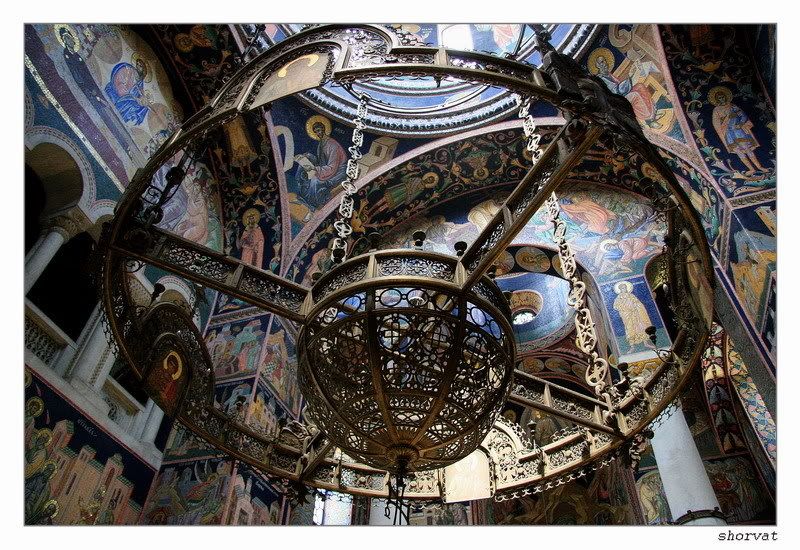
The most important characteristic of church is the mosaic that covers much of the interior walls, made from Murano glass from Venice. I loved the huge candelabra which is made of melted weapons from the Battle of Kajmackalan in WWI and in the shape of the medieval crown of Serbia but upside down, symbolising Serbia's mourning at the loss of their country at the Battle of Kosovo in 1389.
Entry tickets are 300 Serbian Dinars which is around GBP2.5 or Euro 3. The price includes entrance to St George's Church (the curator is happy to give you lots of information in English), King Peter's house (a small summer villa built in 1912 for his own use and today a museum), the villa of King Alexander I and Queen Mary (closed to visitors at the moment) and entry to the tower and Church of Our Blessed Lady of Karadjordje Town, dating from 1811-1813.
If you have time you may visit the royal winery at the foot of Oplenac Hill. Every year in Topola since 1963, on the 2nd weekend in October, the traditional Oplenac Vintage takes place.
By car from Belgrade is around 3 hours each way, through picturesque countryside. But please be aware that the roads are potholed and road signs are very poor in Serbia – most of the time there are no signs at all, and if you are lucky enough to find any they are in Cyrillic. But on the upside, there are lots of traditional Serbian restaurants known as "kafana" which serve wonderfully hearty, freshly cooked food and the average price is a modest GBP15 for a three course meal including drinks. We recommend MB Kafana.
For more information about a Private Day Trip to Oplenac and Topola or any place in Serbia please email Tara@ReadyClickAndGo.com or visit our website at www.ReadyClickAndGo.com