Showing posts with label travel news for serbia. Show all posts


Tonight is Christmas Eve in Serbia and the last day of 40 fasting days before Christmas. According to tradition, today's lunch is a lenten lunch which usually consists of soup, fish, stuffed wine leaves, beans and salads and during the day we also eat dried fruit, walnuts, red wine and honey. Before lunch the tradition is to bring into the house a branch of an oak tree which symbolises the tree brought by a shepherd and given to Joseph and Mary to make a fire in the stable where Jesus was born. In the villages around Serbia the branch of oak is cut in the forest but in the big cities it's usually bought at the market or in church, and it is burned tonight to represent light and warmth bringing a new beginning. There are lots of traditions which symbolise Jesus's birth, for example, it's good to bring straw into the house to symbolise the crib in which Jesus was born, and to have coins scattered around the house similar to the gold coins given to Jesus by one of the Kings.

Tomorrow is Christmas Day and according to tradition, we go to the midnight liturgy, then in the morning a guest (ideally a young healthy male!) is allowed into the house on this day, bringing the new year. The greeting on the Christmas Day is Hristos se rodi which means Jesus is born - the reply is Vaistinu se rodi which means Verily is born. After returning from the morning liturgy the custom is to serve a Christmas lunch which means the end of the 40-day long fast. The feast starts with prayer, lighting a candle and incense. Lunch is different rotiserie meats, lots of cakes, salads and drinks, and a loaf of home-baked bread in which is hidden a coin - whoever finds it can expect lots more money during the coming year! The custom is to exchange presents and spend the whole day at home, visiting friends and family the next day.

Churches that follow the Julian Calendar celebrate Christmas Day on 7th January – Serbian Orthodox Church, Russian Orthodox Church, Jerusalem Church, Egyptian Kopti, some Etiophians, Ukrainians, Belorussians, Macedonias and Montenegrians.

Merry Christmas!

For more information about Serbia please check www.ReadyClickAndGo.com
 or email Tara@ReadyClickAndGo.com

Meet the Romans in Serbia


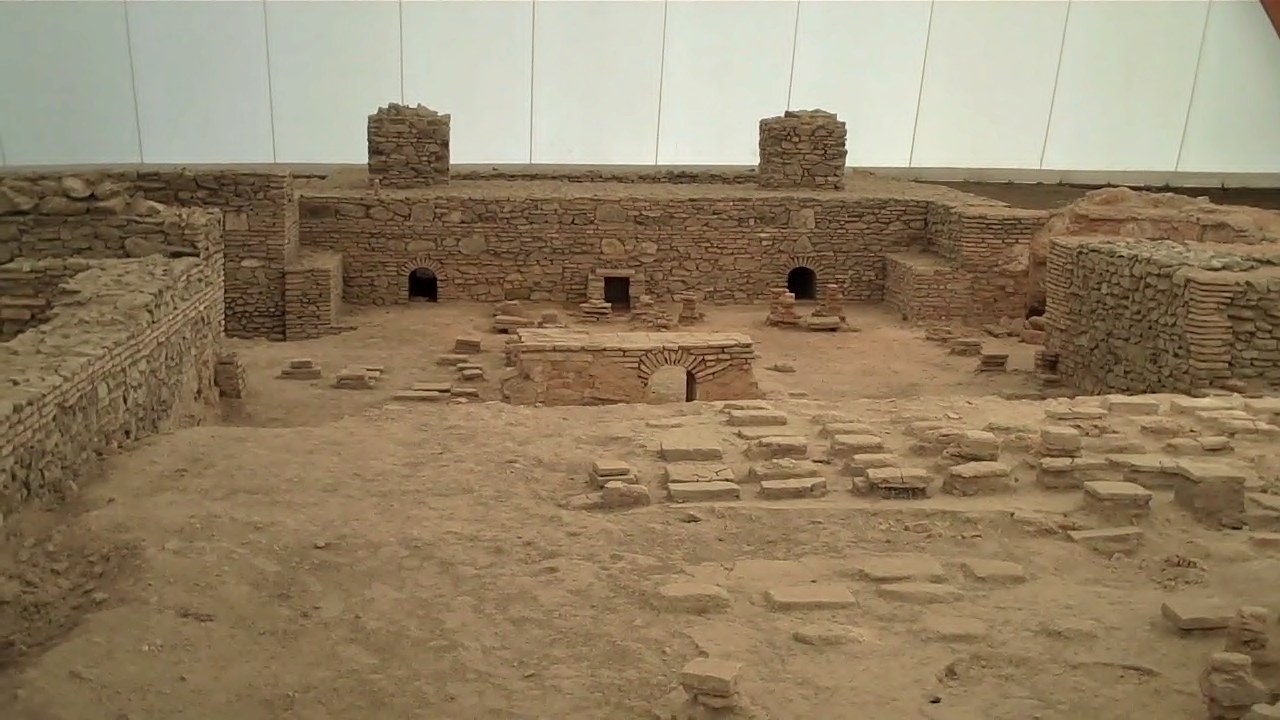
I was sat right at the top, in the Royal Opera House it would have been seat Y51 – very high up with a restricted view. Looking down and behind the half naked archaeologist who was unmoved by the burning sun I could almost see Russell Crowe fighting ferociously for his freedom. Behind me was a flat green field with occasional glimpses of the Danube river, on whose bed was preserved this rich archaeological site.

 “We are standing at the top of the amphitheatre with a capacity of 12,000 seats” the voice of the enthusiastic guide woke me up.

We are at Viminacium, one of many Roman towns and fortress in Serbia, not far from the capital city Belgrade. It covers a huge area and some of it is still undiscovered due to the presence of the nearby power plant which produces 20% of Serbia's energy. The government is trying to buy land still owned by the local people to stop the theft of artefacts that are uncovered after heavy rain.

Large numbers of lamps, bricks, paving tiles, rings and coins have been uncovered and exhibited either at the Museum in Pozarevac or the Museum in Belgrade. The Viminacium complex is building their own museum too at the moment.

The site has beautiful tombs decorated with frescoes whose colour was still bright and with mixed pagan and Christian symbolism. Tomb G5517 has a Christogram in a double floral garland and this is known as a Constantine Cross, after the first Roman Emperor to convert to Christianity. Tomb G2624 has animals and flowers and is clearly pagan, thus proving that Christians and Pagans were sometimes buried in the same cemetery.

Serbia has the largest number of Roman emperors born outside of Italy – 17 altogether, among them  Constantine I and Justinian I. The tourist board has put together a project to combine visits to all the major Roman excavations on Serbian soil, called Itinerarium Romanum Serbiae. It will incorporate Sirmium, today known as Sremska Mitrovica, Singindunum which is Belgrade, Viminacium or Stari Kostolac, combined with visits to the forts of Nis, Kostol and Karats. The itinerary also includes visits to the imperial residences at Gamzigrad and the UNESCO site, Ĺ arkamen, Mediana and Iustiniana Prima .

2013 will see the 1,700 anniversary of the Edict of Milan by which Emperor Constantine legalised Christianity throughout the Roman Empire, and celebrations will take place in the city of his birth, Nis. A historic moment is planned when the Pope and the Patriarch of the Orthodox Church meet formally for the very first time.

For more information about travelling in Serbia please check our website or Email Us.  

A Night at the Museum in Belgrade, Serbia


For the eighth year in a row Belgrade is organising a Museum Night! This will take place on the 14 May 2011. Contrary to the movie “Night at the Museum” where Ben Stiller discovers that an ancient curse causes the animals and exhibits on display to come to life and wreak havoc, Museum Night in Belgrade is more havoc but in the sense that all these people who never had the time or money to go to a museum suddenly decide to go. The opening hours of the museums are 6pm-2am, and the best thing is that you buy one entry ticket for the price of RSD350 (approx. 3.5 EURO) and the ticket is valid for all museums and events open that night! Even public transport is free of charge with a museum ticket.
In Belgrade there will 95 events at 67 locations scattered around the city, and 58 other towns and cities in Serbia will host similar events. In order to see as much as possible you would need to plan and prepare, but the best way to start is at the official website of the Museum night - the only problem is that the site is in Serbian but at least with Latin script rather than Cyrillic! http://www.nocmuzeja.rs/
Expect a lot of crowds but not the regular ones like the usual strikers on the streets asking for their jobs back, but happy crowds, running from one part of the city to another and in passing exchanging tips on where to go and what to see. This is an excellent opportunity to find out more and learn about little secrets in this city with a uniquely fascinating history. The last time I went on a Museum Night stroll in Belgrade I visited the Bank Museum which I didn’t even know existed even though I was born in the city. We had a fantastic time learning about money in Serbia since the Tsar Dusan, the first Emperor of Serbia, whose coinage was on display.
 Except for the unusual opening times at the standard museums such as Konak of Kneginja Ljubica, Art Museum, Natural Museum, Jewish Historical Museum etc, there are some exhibitions open just for this night, Museum night.
At the Kalemegdan Fortress near the impressive Military Museum boys will be able to see a workshop for forging iron swords and try their skills at making a sword themselves. Not far from them, the girls will have unique opportunity to see the art of making hats and to try and make one too.
The Faculty of Philosophy will have an open door and show how old Romans played social games, The Danube Adventurethe National Tourism Board of Serbia has an interactive exhibition called Danube Adventure where you can see how to cycle along the Danube river on the famous Eurovelo 6 route which goes all the way to the Black Sea. At the Educational Museum there is the possibility to learn about the process of making wine in Serbia. At the Villa of King Peter Karadjordjevic you will be able to see for the first time hundreds blue trainof photos of the king, his family, contemporaries and events. Brazil will be represented at the night of Museums at Kalemegdan Fortress with different dances, concerts and readings of Brazilian stories. There will be an excellent opportunity for train spotters at the Railway Museum with an exhibition of the Blue Train which was Tito’s official train and carried a huge number of foreign dignitaries such as Indira Ghandi and Queen Elizabeth. For the first time the exhibition will display the original features from this period: busts and paintings, official stationery, models, emblems, charters, badges and schedules of the Blue Train.
Lots to see and experience but not enough time to squeeze everything into 8 hours. Definitely an excellent opportunity to get to know Belgrade and Serbia!
For more information what to see and do in Serbia please email Tara@ReadyClickAndGo.com